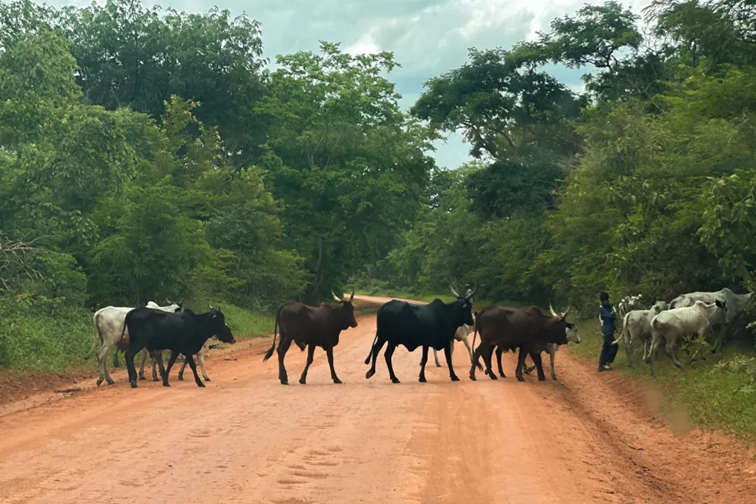
Across Africa, the livestock sector supports more than 350 million people. Livestock is much more than an agricultural commodity. For millions of families, cattle, sheep, goats, poultry, and other animals are sources of food and income. They are also productive assets that support trade, processing, services, employment and rural wealth creation. Despite its centrality to Africa’s wider agrifood economy, the systems that govern and influence the continent’s livestock sector remain among the most undercapitalised parts of African agriculture. Africa loses an estimated USD 4 billion every year due to unrealised livestock potential.
Too often, livestock farmers, particularly pastoralists and small-scale producers, are seen through the lens of subsistence and poverty. Investors see fragmented markets, climate exposure and informal production systems and conclude that the risks are too high. The challenge is therefore not only a shortage of capital, but an investability gap: fragmented supply, weak market information, uncertain offtake, and policy and regulatory uncertainty can make otherwise viable opportunities difficult to assess and finance.
Many countries also continue to face widespread circulation of substandard and falsified veterinary products, varying levels of regulatory capacity, high dependence on imported medicines and the escalating threat of antimicrobial resistance.
Public investment is central to addressing these challenges, but spending has often lagged behind government pledges. Under the 2003 Maputo Declaration on Agriculture and Food Security, African governments pledged to allocate at least 10% of national budgets to agriculture and rural development. More than two decades later, most countries have fallen short. The persistent gap highlights the challenge governments face in financing the services and infrastructure needed to attract and sustain private investment.
Africa’s annual food import bill was estimated at around US$70 billion in 2025, despite its wealth in arable land and livestock. Although this figure covers far more than livestock products, it underscores the scale of food demand that African producers could be better equipped to serve. Meeting more of that demand requires investment not only in production, but also in getting food reliably and competitively to market. The opportunity is not simply to import substitution; it is to build competitive African value chains capable of serving regional demand and other higher-value markets.
The African Union–Inter-African Bureau for Animal Resources (AU-IBAR) is working to address these gaps by bringing together governments, regulators and investors to connect fragmented livestock markets. Its approach seeks to strengthen regional trade while improving farmers’ livelihoods and supporting rural economies.
Through the Integrated Regional Livestock Value Chain Transformation Programme (IRLVC), AU-IBAR links priority livestock value chains with regional trade corridors, market access and investment. The programme focuses on making cross-border trade more workable through coordinated standards and policies, while creating opportunities for private-sector participation and financing. Alongside this, the Africa Pastoral Markets Development (APMD) Platform strengthens pastoralists’ market participation and enterprise resilience and supports commercially viable investment pathways that could help unlock up to US$500 million in pastoral investment opportunities, while improving consumers’ access to livestock products.
Stronger regional markets could attract investment in processing, transport, feed and animal health services, supporting businesses and jobs across rural economies. Harmonised standards, more efficient trade corridors and coordinated disease control would lower barriers to trade and make markets more predictable for producers and investors. In economic terms, these are forms of market infrastructure: they lower transaction costs, reduce uncertainty and improve the risk-return proposition for investment. Ultimately, success should be measured not only in investment flows or trade volumes, but in better returns for farmers and more secure livelihoods for pastoral communities.
Across East Africa, countries are demonstrating what is possible with the right investment. Ethiopia, home to one of the world’s largest livestock populations, is addressing gaps in feed, productivity, processing and markets through improved breeds, forage, animal health, and investments in dairy and poultry. Uganda, where livestock contributes about 17% of agricultural GDP, is investing in breeds, feed, genetics, animal health and dairy infrastructure to unlock the sector’s potential. Rwanda is taking a targeted approach, presenting a US$169.8 million investment case for pigs and poultry covering genetics, feed, production hubs and slaughterhouses.
In Kenya, the livestock sector contributes 12% of the country’s GDP, and accounts for 42% of agricultural output. The Kenya Pastoral Market Development (KPMD) Program, implemented by Strathmore University Business School with catalytic funding from the Gates Foundation, is investing in resources and market systems to make pastoral economies more productive and commercially viable.
This catalytic support helps absorb early-stage risk, demonstrate viable business models and create conditions that can crowd in private investment. The results are encouraging. Across both phases of the program, off-takers have purchased over 334,000 sheep and goats from pastoralists. Women make up 54% of registered pastoralists, and participating households earn an estimated average of over US$600 from livestock sales to off-takers. These results show how coordinated investment in services, risk management and market access can make livestock enterprises more investable and economically viable within enabling systems.
This approach aligns with the African Union’s 2026-2035 Comprehensive Africa Agriculture Development Programme (CAADP) Strategy to build resilient and sustainable agrifood systems in Africa, which aims to triple intra-African trade in agrifood products and inputs by 2035.
Turning this strategy into impact will require strategic deployment of resources, enabling policies and partnerships. Philanthropic investment can fund the early work that commercial investors may be reluctant to back. That work includes testing new delivery models, strengthening farmer organisations and building the evidence needed to show which approaches are viable, can work at scale and warrant further investment. Public finance plays a critical role in building enabling ecosystems, including animal health and disease surveillance, roads, market infrastructure, data, standards, research and cross-border trade frameworks. Once these are in place, private capital can finance and scale commercially viable enterprises throughout the livestock value chain.
The challenge is to bring these sources of capital together, rather than expect any one of them to finance the livestock sector’s transformation alone.
The climate crisis makes getting this architecture right even more urgent. Africa’s livestock farmers are already among the most vulnerable to rising temperatures, prolonged drought and flooding. We should therefore be asking how our policies and investments can make livestock systems more resilient to climate change. This is not a matter of charity. It is an economic strategy that protects productive assets, cash flows and long-term investment performance.
Africa cannot build a stronger agrifood economy while leaving pastoralists and small-scale livestock producers on the margins of investment. Governments must strengthen animal health services, improve market infrastructure and remove barriers to regional trade, while investors and development partners must back proven models, local processing and production systems that can withstand a changing climate. These investments should be shaped with livestock-keeping communities, opening opportunities for women and young people to build businesses and earn a living.
The commitment now must be to fund what works and make it accessible to more producers. The measure of success will be whether Africa converts more of its livestock wealth into resilient livelihoods, competitive enterprises and deeper regional trade.