The EU recently presented its latest Arctic strategy. It is the bloc’s fifth such strategy since 2008 and the first to be published since 2021, a few months before Russia launched its full-scale invasion of Ukraine.
This conflict has disrupted Arctic governance. The work of the Arctic Council, which includes Russia as one of its eight member states, was paused shortly after the invasion. The council is the primary forum for cooperation in the region.
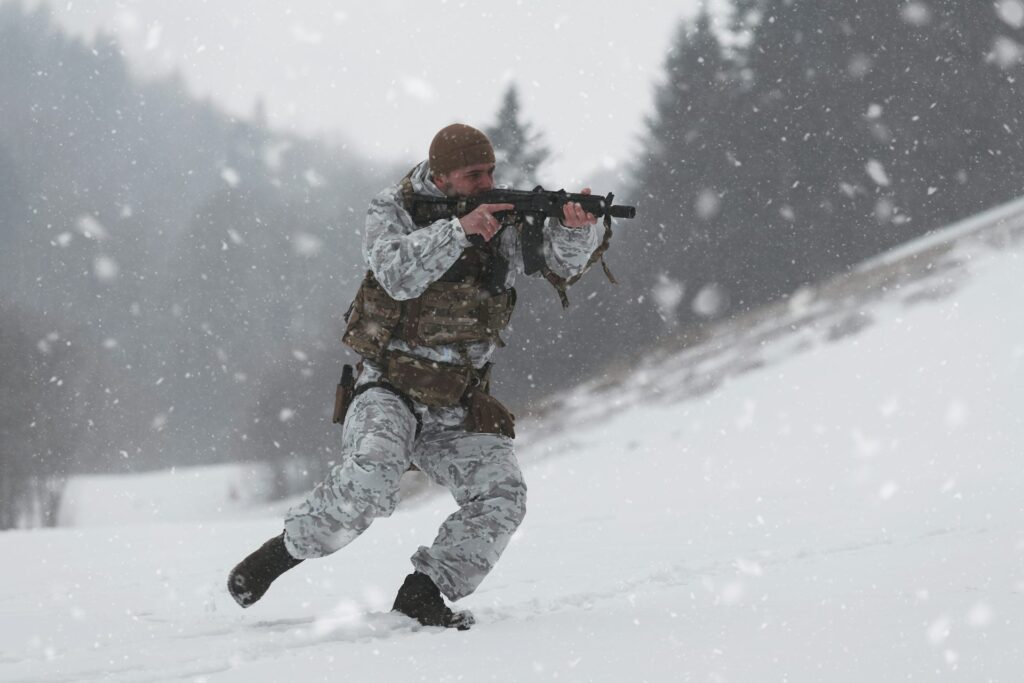
Since 2022, the Russian security threat in the Arctic has also grown. Russia has engaged in hybrid activities in the region, ranging from disinformation operations and GPS jamming to the targeting of pipelines and undersea cables.
The EU’s new strategy has four priorities: strengthening peace, security and resilience in the Arctic, addressing climate change, delivering economic development and ensuring regional and social development for Arctic communities.
These priorities are broadly in line with the previous 2021 strategy, in which geopolitical issues were already more present than in earlier years. But there are several major changes.
More security and less climate action
A word count reveals the profound impact the deteriorating cooperation context has had on the EU’s stance on the region. In the latest update, the word “security” is mentioned 52 times compared with 23 times in 2021. By contrast, “climate change” appears only 14 times in the new strategy compared with 30 times previously.
This shift towards security is a general trend in the Arctic since 2022. The creation of an annual Arctic Security Conference in 2024, which discusses security trends in the region, is an example of this. Security also figures prominently in recently published national Arctic strategies, including France, Italy, Germany and Sweden.
Climate change is not completely absent from the EU’s latest Arctic strategy, and the bloc reaffirmed its commitment to combat it in the document. But, where previously climate change was the cornerstone of the EU’s Arctic engagement, it is now presented through a security lens. Climate change is identified as “amplifying security risks” and a “defining threat” from which Arctic inhabitants need to be “protected”.
Security shapes all four priorities of the new strategy. Arctic communities also get much more attention than in earlier documents.
Although the inclusion of Indigenous people also figures more prominently, the conflation between Indigenous and local people has previously been criticised by the Saami Council. The conflation undermines the specific rights and distinct interests of Indigenous groups such as the Sámi.
A ‘northern neighbourhood’
Another key change in the EU’s new Arctic strategy is the introduction of the concept of a “northern neighbourhood”. The name suggests similarities with the EU’s European Neighbourhood Policy, which it launched in 2004 to foster closer ties with its eastern and southern neighbours. But it is unclear what exact form the northern neighbourhood will take.
The northern neighbourhood is not presented as a new multilateral institution. Instead, it has been put forward as a political framework enabling cooperation projects and integration between the EU and “like-minded” partners such as Greenland, Norway, Iceland, Canada and the UK.
By excluding Russia, this new political framework signals a change in the EU’s understanding of the Arctic. The EU’s early engagement in the region came from a will to extend European integration to the east and north in the 2000s. The Arctic was also an area where cooperation with Russia was possible, despite disagreements elsewhere.
The concept of a northern neighbourhood reveals a geographical shift in focus towards Greenland and the west and north Atlantic more generally. Yet while the US is still listed among the potential members of the northern neighbourhood, it comes with implicit conditions.
According to the new strategy, a partnership with the US needs to be “predictable” and based on “shared interests and values”. This is reminiscent of the language that prevailed for Russia in the previous policies.
What kind of power is the EU?
Perhaps the biggest change in the new strategy lies in the document’s affirmation that multilateral cooperation “can no longer be the sole foundation of the EU’s Arctic approach”.
This means two things. First, that multilateralism is no longer the prominent form of cooperation in the Arctic. And second, that the EU’s geopolitical stance in general is changing from being the champion and embodiment of multilateralism to another form of power.
This is also visible in the emphasis the new strategy puts on the EU’s material capabilities and infrastructures as conditions for security. It includes mention of, among other things, developing Europe’s capacity to build icebreaker vessels.
The EU’s new Arctic strategy signals a broad shift in the European geopolitical mindset. Climate change and multilateralism have been overshadowed by security concerns due to the fractured Arctic geopolitical landscape.
However, ultimately, climate change and social concerns will remain key priorities of Arctic inhabitants and the EU should not lose sight of this.
Emilie Canova does not work for, consult, own shares in or receive funding from any company or organisation that would benefit from this article, and has disclosed no relevant affiliations beyond their academic appointment.